If you’re an artist reading this post, I think you’ll understand. When it comes to art, I’m an art materials junkie! There’s nothing quite like perusing the aisles of an art supply store. You see new products and start dreaming. You find yourself planning what you would make with them. Or the delight of ordering supplies online and anticipating their arrival at your door.
In my many years I’ve either taken classes or explored every two-dimensional art material on the market. I love the beauty of fast drying acrylics. I cherish manipulating oils on a canvas for its classic quality. I appreciate the spontaneity of ink, pens, the freshness of watercolors, gouache, pastels, oil pastels, charcoal etc.
This month I am exploring ‘crayons!’ Yes, as a child we had Crayola crayons. I remember my older sisters disapproving of my mess in their coloring books. “Stay inside the lines!” I often heard. In 2020 I experimented at the Torpedo Factory in Alexandria with encaustic painting. The class was taught by the amazing, but unfortunately late, Bev Ryan. God bless you up in Heaven Bev!
I will make my next post about encaustics. Though I’m not enamored with all the equipment, heated pans, hot wax and mess involved.
I’ve even attempted my hand at batik. But there doesn’t seem to be anything quite as simplistic and pure as wax crayons.
I am taking a four week class at The Center here in Charlottesville Virginia from Vivian Jones-Schmidt. Her teaching method comes from the ‘Waldorf School’. An educational system based on the writings of the occultist Rudolf Steiner. Developed for a younger age group, I have found some of the practices very beneficial.
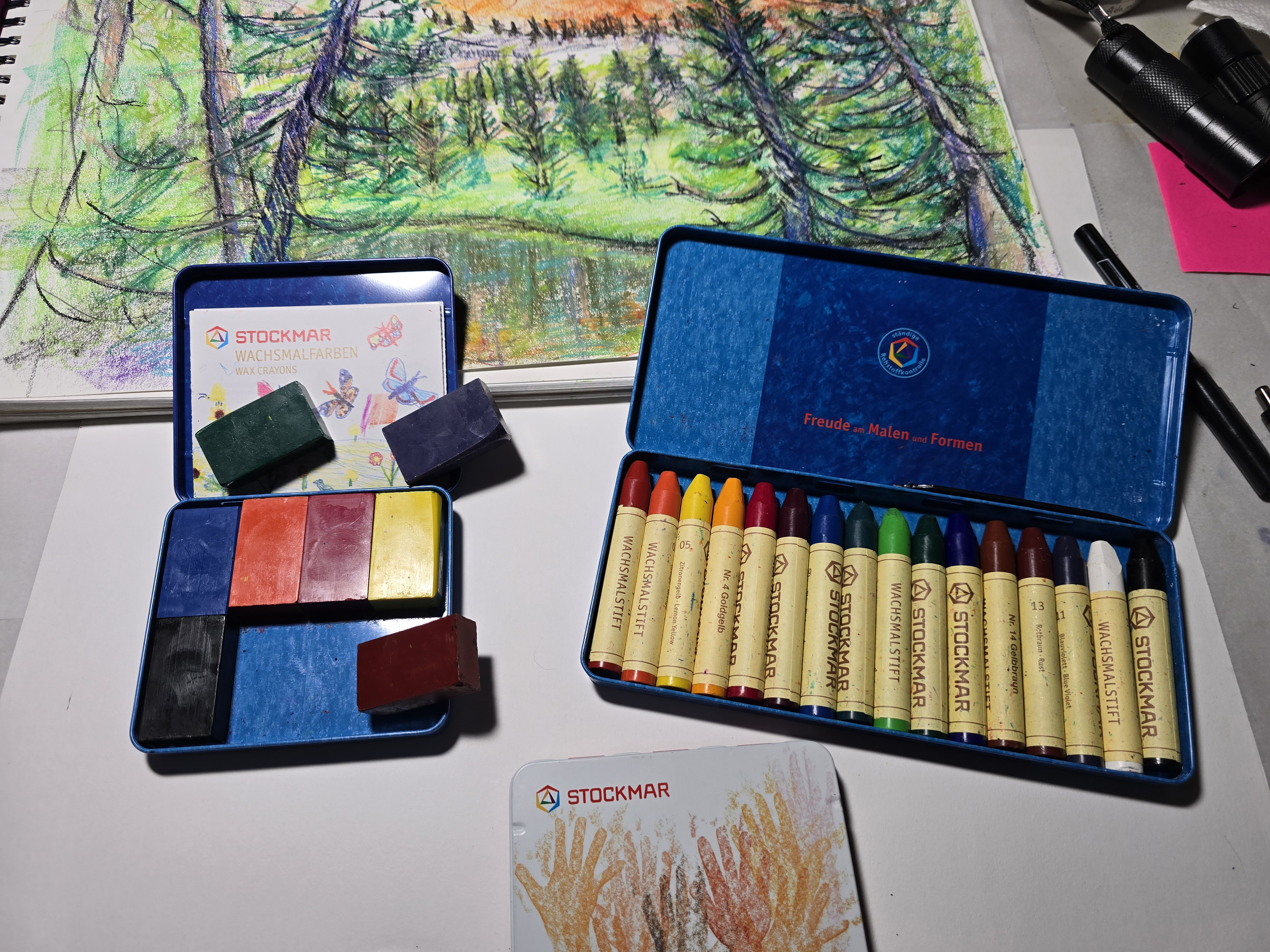
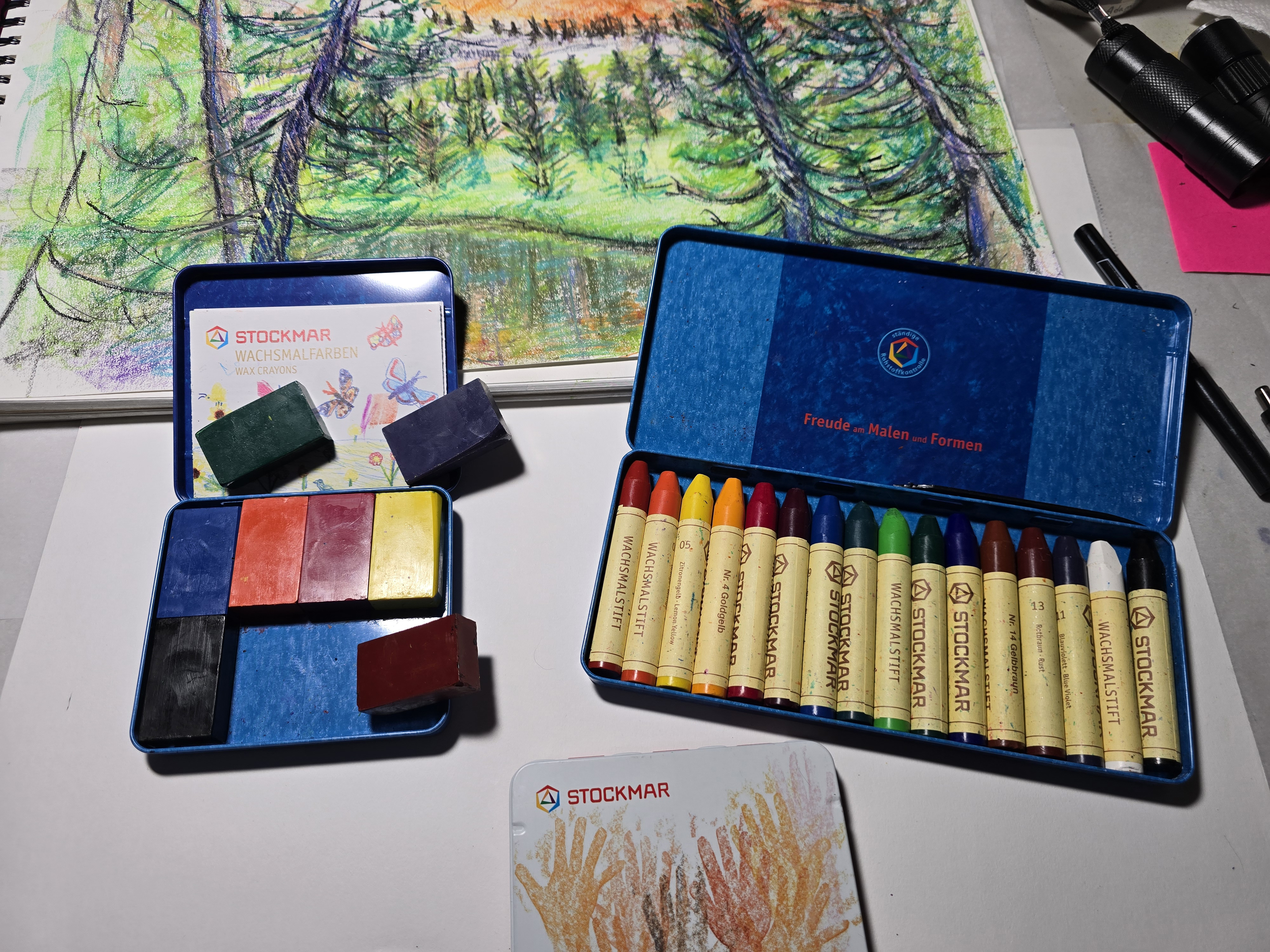
Also, look at these German made Stockmar beeswax crayons. They come as either blocks or crayons. They’re not like Crayola. The wax is harder. They don’t smudge. Maybe they’re better for kids. There certainly are not as many colors – no box of 72 or 120! I like the little block shaped ones best. You can use the edges and various flat surfaces. This way, you get a variety of textures by varying the pressure. It might even be impossible to break the blocks. I remember as a kid the frustration of broken crayons.
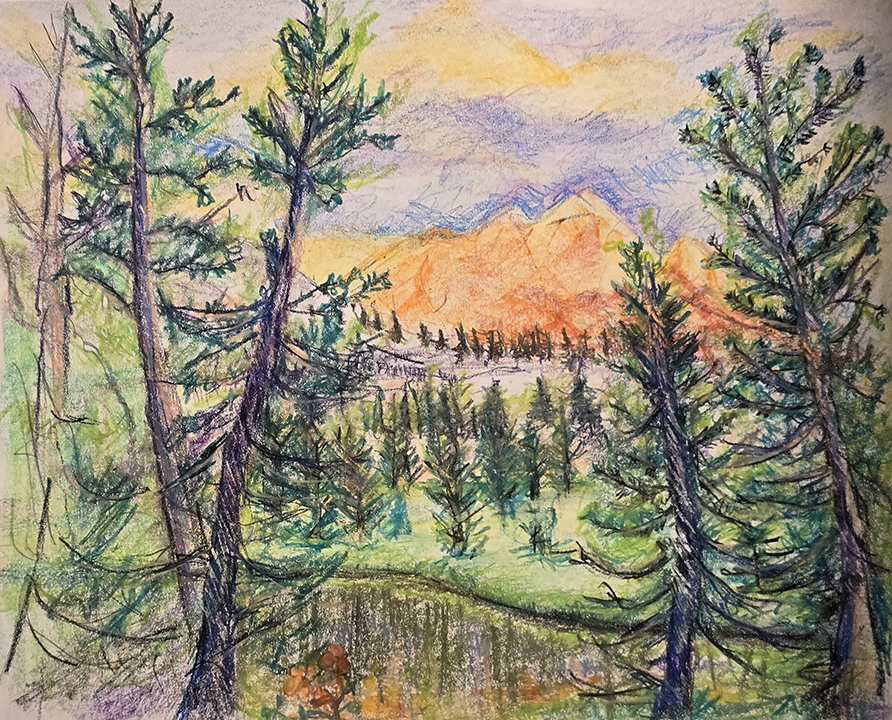
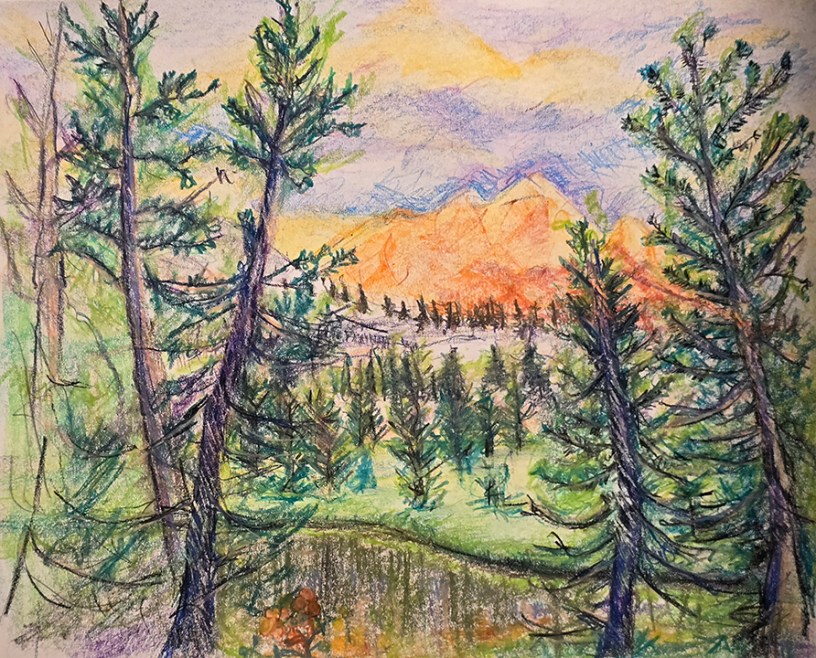
This was my first attempt at using Stockmar crayons and blocks. I did most of the under coloring with them.
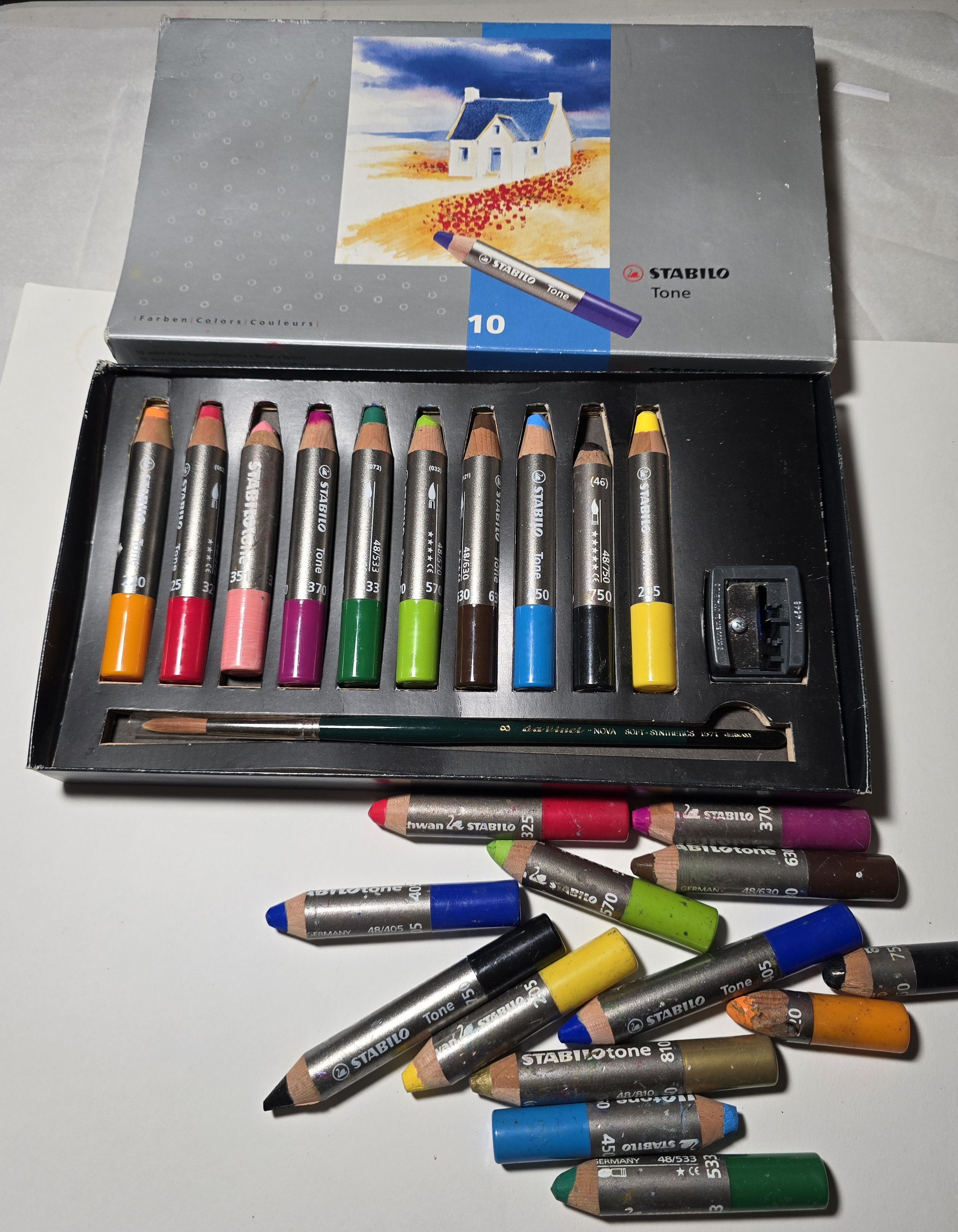
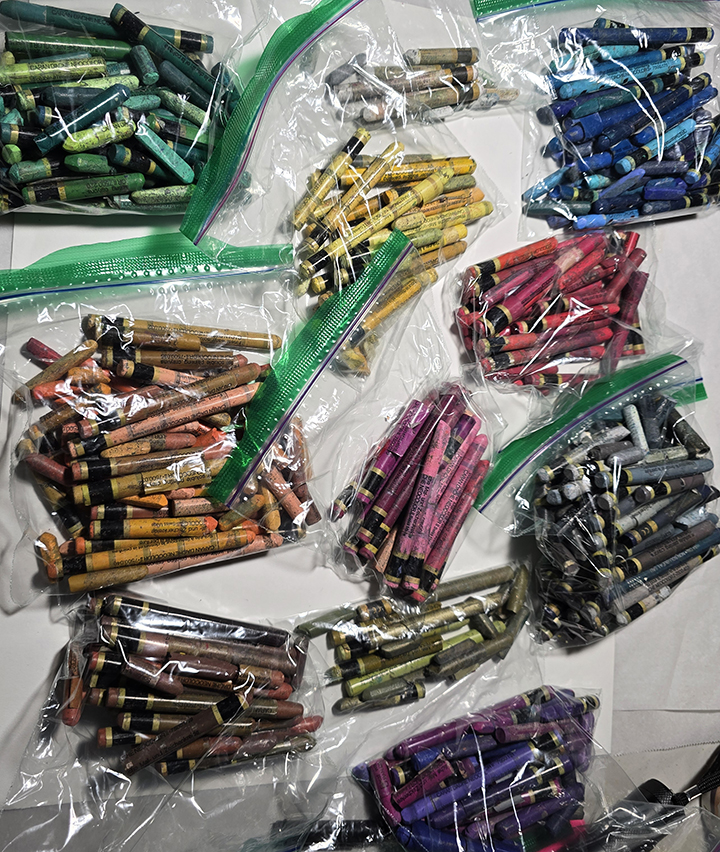
I felt the selection of colors was limited. There were not enough greens available. Because of this, I reverted to my beloved Caran Dache wax with oil crayons. I also returned to my beloved Stabilo Tones with their unbreakable wooden sides.
Thus I ended up with a somewhat heavily worked drawing.
All this wax work is to be continued. I have three more classes. I will see how this evolves and how I can use the Stockmar by themselves.
In the meantime, visit my post on encaustics.